MA-UNI STRATEGIC PARTNERSHIP BRIEF
MA-UNI
An independently developed full-scale humanoid robotics platform,
built from concept to physical prototype
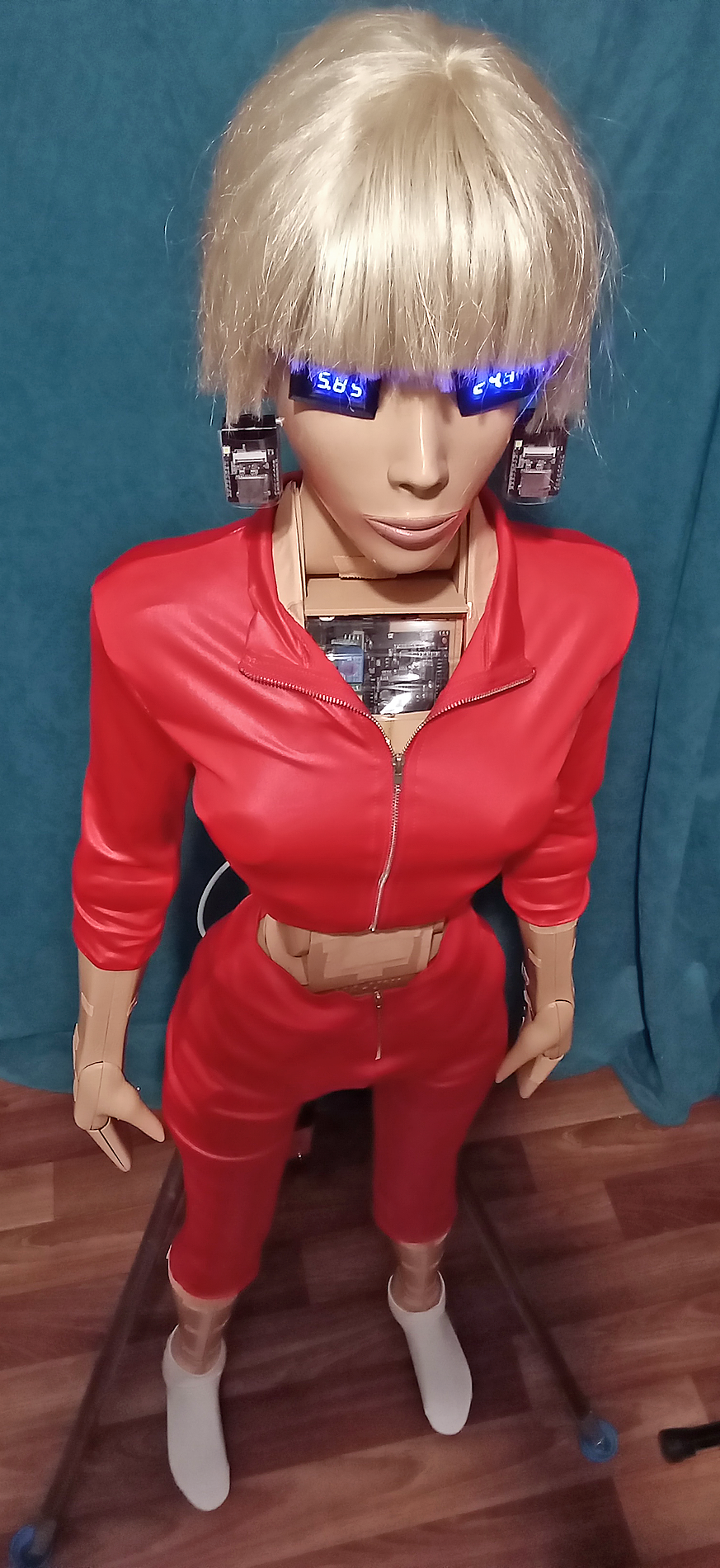
MA-UNI is an invitation to explore a strategic development opportunity.
Independent Humanoid Robotics Platform · Bulgaria · 2026
PROJECT OVERVIEW
A Different Starting Point for Humanoid Robotics
MA-UNI is an independently conceived, designed and physically built full-scale humanoid robotics platform developed in Bulgaria.
MA-UNI explores a different way of thinking about humanoid robotics.
Rather than treating human appearance as a shell placed over an engineered machine, MA-UNI begins with the idea that the body itself should become the organizing principle of the mechanical architecture.
The current prototype is the first physical demonstration of this architectural direction.
One creator.
One full-scale humanoid prototype.
One opportunity to build the next stage together.
What MA-UNI Represents
Physical Platform
A real human-scale humanoid prototype demonstrating integrated mechanical architecture, articulated body structure and programmable coordinated movement.
Engineering Foundation
A modular robotics architecture intentionally designed for iterative engineering development rather than as a finished commercial product.
Design-Led Robotics
A development philosophy in which mechanical architecture and human-oriented body design evolve together as one integrated engineering system.
Development Opportunity
A physical starting point for industrial engineering, AI integration, advanced actuation and future manufacturing collaboration.
The objective is not to present a finished humanoid product.
The objective is to present a credible starting point for professional development.
ENGINEERING THESIS
The Core Engineering Hypothesis
MA-UNI is built around one central engineering hypothesis:
A human-oriented body architecture can become the foundation of a scalable humanoid robotics platform when mechanical systems, electronics, motion control and future intelligence are integrated into one evolving physical structure.
- Integrated body architecture.
- Modular engineering evolution.
- Progressive capability development.
CURRENT PROTOTYPE
Engineering Snapshot
The current MA-UNI prototype is an independently built full-scale humanoid robotics proof of concept demonstrating the project's physical architecture, mechanical integration and programmable motion capabilities.
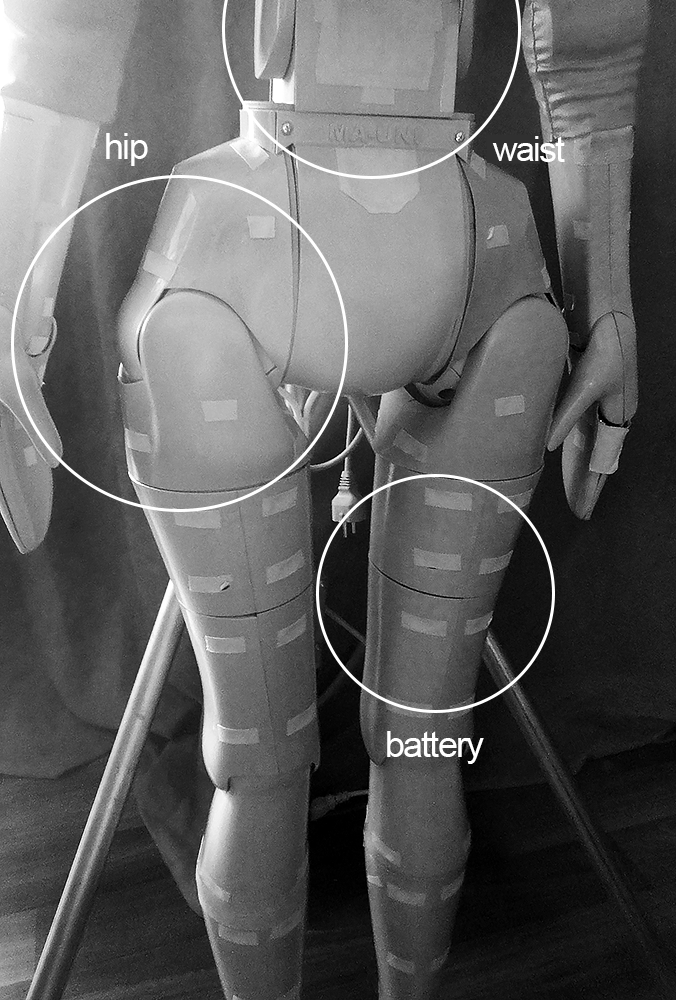
Prototype Parameters
155–160 cm
Human-scale height
10–15 kg
Current prototype weight
30 (up to 100)
Servo-actuated joints
Modular
3D-printed body architecture
Engineering Foundation
Mechanical Architecture
Lightweight modular humanoid structure designed for iterative engineering development and future redesign of individual body sections.
Motion System
Approximately thirty independently actuated joints supporting articulated movement of the arms, legs, torso and waist.
Electronics Integration
Embedded control architecture, integrated power distribution, dedicated electronics and autonomous battery operation.
Digital Fabrication
Structural components produced through 3D modelling and additive manufacturing for rapid mechanical iteration.
The prototype demonstrates that the architecture already exists as a functioning physical system.
DESIGN-LED ROBOTICS ARCHITECTURE
Why This Architecture Is Different
MA-UNI begins with a different engineering question:
How can a complete humanoid mechanical system be integrated into a human-oriented body architecture from the beginning?
Architectural Principles
MA-UNI explores a design-led approach to humanoid robotics in which mechanical architecture and human-oriented body design are developed as one integrated system.
| CONVENTIONAL APPROACH |
MA-UNI APPROACH |
| Mechanical system first. Exterior later. |
Human-oriented architecture developed together with the mechanical system. |
| Components remain visually dominant. |
Components integrated into the body architecture. |
| Prototype optimized around exposed mechanics. |
Prototype optimized around an integrated humanoid body structure. |
| Appearance follows engineering. |
Engineering and appearance evolve together. |
The appearance is a consequence of the architecture—not a cosmetic shell.
WHAT HAS BEEN DEMONSTRATED
Current Technical Validation
The current prototype demonstrates the successful physical realization of the initial MA-UNI architecture.
Physical System
• Full-scale humanoid body
• Human-oriented proportions
• Lightweight structure
• Integrated body architecture
Mechanical System
• Approximately 30 actuated joints
• Articulated arms and legs
• Waist articulation
• Modular body sections
Control System
• Embedded controller
• Programmable coordinated movement
• Autonomous power system
• Motion sequence execution
Development Platform
• 3D fabrication workflow
• Replaceable structural components
• Iterative engineering approach
• Physical proof of concept
The current prototype validates the existence of the platform. It does not claim completion of the final humanoid system.
NEXT DEVELOPMENT STAGE
Engineering Priorities
The next stage transforms the existing prototype into a professionally engineered robotics platform.
Dynamic Balance
Independent standing without external support.
Locomotion
Stable walking through coordinated whole-body control.
Actuation
Industrial-grade joints, transmission systems and motion control.
Sensing
IMU, vision, force sensing and environmental perception.
Electronics
Embedded computing, communication architecture and power management.
Reliability
Testing, durability and safety engineering.
The next stage is engineering development—not another conceptual prototype.
TECHNICAL DEVELOPMENT MILESTONES
From Standing to Autonomous Behaviour
The development path is defined through progressively integrated engineering capabilities.
01
Stand
Static balance and unsupported upright posture.
02
Walk
Controlled locomotion with dynamic balance.
03
Perceive
Basic environmental awareness through integrated sensing.
04
Recover
Fall detection and recovery behaviour.
05
Act
Integration of movement, perception and increasingly autonomous behaviour.
STAND → WALK → PERCEIVE → RECOVER → ACT
BUILDING THE NEXT STAGE
From Independent Prototype to Professional Development Platform
The next stage requires capabilities beyond what can realistically be developed independently by one creator.
The objective is to establish a focused multidisciplinary engineering team around an already existing physical platform.
Core Development Areas
Mechanical Engineering
Structural optimisation, joints, durability and manufacturing redesign.
Embedded Electronics
Power systems, sensing, communication and embedded computing.
Robotics Software
Motion planning, control systems and platform integration.
Artificial Intelligence
Perception, language, interaction and autonomous decision making.
Manufacturing Engineering
Materials, tooling, production methods and scalability.
Validation
System testing, reliability, safety and performance evaluation.
The goal is not simply to build another prototype. The goal is to build the engineering capability behind the platform.
STRATEGIC PARTNERSHIP MODEL
Different Partners. Different Roles.
Potential Partnership Roles:
| PARTNER |
CONTRIBUTION |
| Robotics engineering organizations |
Mechanical systems, controls, integration.
|
| AI organizations |
Perception, intelligence and autonomy.
|
| Industrial engineering partners |
Manufacturing and product engineering. |
| Research Institutions |
Joint robotics R & D and validation. |
| Strategic Investors |
Capital for team formation and engineering development.
|
Partnership Philosophy
The intention is not to outsource development.
The intention is to build the multidisciplinary capabilities required to develop MA-UNI into a professionally engineered humanoid robotics platform.
Partnership means participating in the next stage—not providing isolated components or services.
WHY MA-UNI NOW?
Six Reasons to Look at MA-UNI
01
A full-scale physical humanoid prototype already exists.
02
The platform has been independently developed from concept to working proof of concept.
03
The architecture is modular and intentionally designed for future engineering evolution.
04
The next technical challenges are clearly defined and engineering-oriented.
05
The project is open to strategic engineering, industrial and research collaboration.
06
The opportunity is to build on an existing foundation rather than start from zero.
AN INVITATION TO COLLABORATE
The Next Stage Is Collaboration
MA-UNI already exists as a physical humanoid robotics platform.
The next challenge is to bring together the engineering, industrial and strategic capabilities required to develop it further.
Can this architecture evolve into a new humanoid robotics platform?
That is the question MA-UNI invites its partners to explore.
READ THE FAQ →
WATCH THE PROTOTYPE →
READ DEVELOPMENT & OPPORTUNITY →
STRATEGIC DEVELOPMENT PARTNERSHIP →
← BACK TO RESOURSES